
EDU-SYRIA Call for Proposals
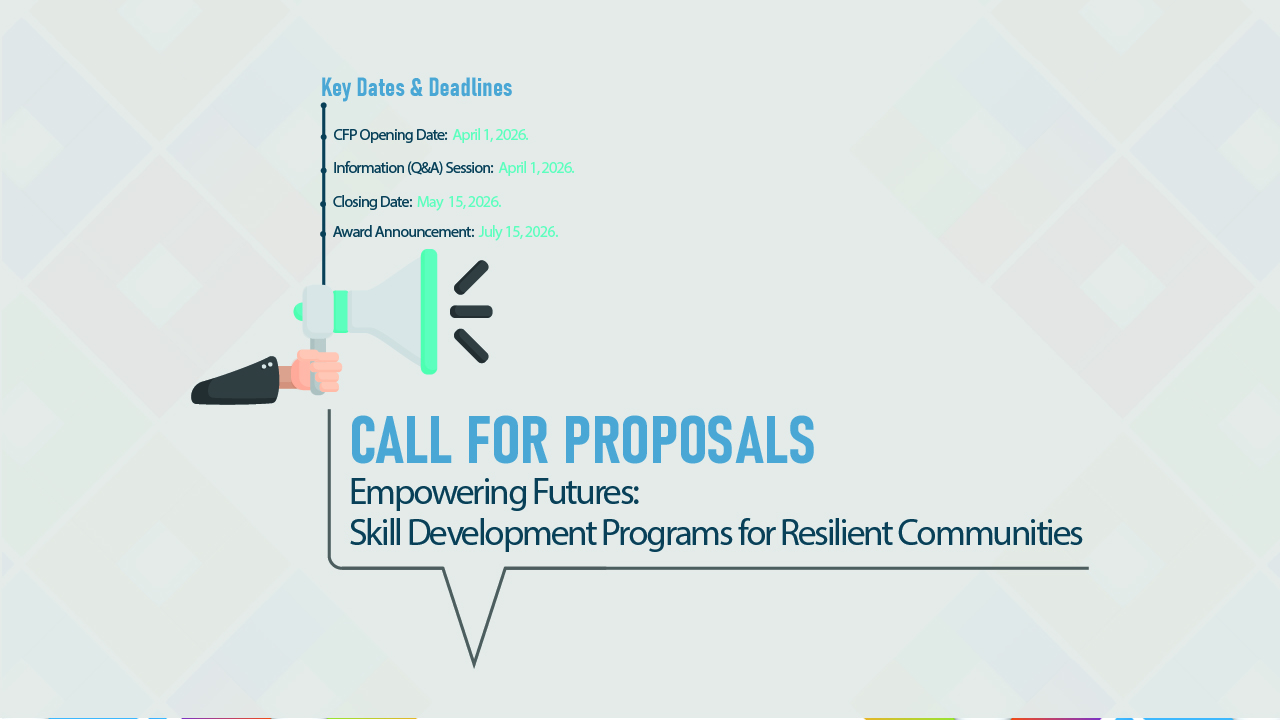
Empowering Futures: Skill Development Programs for Resilient Communities
I.Overview
The Empowering Futures: Skill Development Programs for Resilient Communities initiative aims to foster resilience and adaptability in individuals and communities facing various challenges, particularly for Syrian refugees and underserved Jordanians. We invite candidates to propose innovative programs that contribute to this vision by equipping individuals with essential skills for the evolving job market. Proposals should focus on enhancing employability, promoting lifelong learning, and strengthening community capacity.
Aim
Our goal is to empower individuals from diverse backgrounds by providing them with the necessary skills to thrive economically and socially, thereby building resilient communities. This CFP therefore solicits proposals that target the following:
- “Fast-Track to Professionalism.”
- This initiative aims to equip high school graduates with specialized technical skills for immediate workforce entry. Focus areas for proposals include Next-Gen Automotive Technology (covering Hybrid and Electric Vehicle diagnostics and maintenance), Smart Building & Renewable Systems (training in solar installations and energy-efficient HVAC systems), Precision Hospitality & Tourism Management (focusing on culinary arts, eco-tourism, and restaurants), and ICT Infrastructure (hands-on training in fiber optic installation and cybersecurity).
- Building Resilience
- Foster resilience in communities through skill development that empowers individuals to adapt to challenges. This includes life skills workshops, mental health support, and entrepreneurship training to encourage economic independence.
- Promoting Lifelong Learning
- Instill a culture of continuous learning that equips participants with the skills required to navigate new technologies and market demands. This can involve partnerships with online learning platforms and the establishment of community learning centers, along with mentorship programs to facilitate knowledge sharing.
- Strengthening Community Capacity
- Create a ripple effect of empowerment through skills training, enhancing economic stability and social cohesion within communities. Organizing community workshops and job fairs can strengthen connections between local businesses and job seekers, while collaborative initiatives foster teamwork and enhance community ties.
II. General Information about the Call
1. Key Dates & Deadlines
- CFP Opening Date: April 1, 2026.
- Information (Q&A) Session: A virtual session will be held on April 1, 2026. Please complete the registration form (Click here) to receive the meeting link.
- Closing Date: All applications must be submitted by 23:59 (Jordan Time) on May 15, 2026.
- Note: The EDU-Syria Portal will automatically close and reject any submissions after this deadline.
- Award Announcement: Final selections will be announced no later than July 15, 2026.
2. Funding & Budgetary Constraints
- Total Fund Pool: €300,000 to be distributed among 5 to 6 projects.
- Grant Range: Organizations may request between €10,000 and €60,000 per project.
- Selection Basis: Grants are awarded based on the submitted budget, cost-effectiveness, and adherence to the eligibility criteria outlined below, ensuring that funded initiatives align with the overall theme of empowering individuals and communities through skill development, fostering resilience, and enhancing employability in high-demand sectors. Proposals that demonstrate innovative approaches to addressing community needs and advancing economic stability will be prioritized.
- Please note: To ensure transparency and avoid conflicts of interest, the German Jordanian University (GJU) and its internal administrative or academic entities/centers are ineligible to apply for this call for proposals as lead organizations.
3. Payment Schedule
Grants will be disbursed in three installments based on project milestones:
- Initial Payment (40%): Transferred upon project launch and contract signing.
- Mid-term Payment (40%): Transferred to the project’s halfway point. This amount will be adjusted based on actual expenditure (40% of the total budget minus any unused funds from the first installment).
- Final Payment (20%): Transferred upon approval of the final report. This payment will reflect actual costs incurred; if the budget is not fully utilized, the final payment will be adjusted accordingly.
4. Application Requirements
All applications must be uploaded to the EDU-SYRIA Portal (Click here) in PDF format. The following four annexes are mandatory:
- Annex 1: Completed Application Form (Click here to download the template).
- Annex 2: Detailed Project Budget (Click here to download the template).
- Annex 3: Organizational Capacity Assessment (OCA) (Click here to download the template).
- Annex 4: Valid Jordanian Registration Certificate.
- Annex 5 (Optional): Supplemental documentation to support or strengthen your proposal.
5. Implementation & Submission Rules
- Project Duration: Projects must have a total implementation period of 9 to 18 months, with a minimum of 6 months of active core programming.
- Launch Date: Projects will be funded and launched in 2026 immediately following contract signature.
- Multiple Submissions: Organizations may submit more than one proposal, provided the content of each application is unique and distinct.
- Resources: A Frequently Asked Questions (FAQ) document is available on the EDU-SYRIA website to assist in your preparation.
III. General Eligibility Criteria
- We encourage a diverse range of candidates to submit proposals, including but not limited to the following:
- Organizational Experience: Proposals must be submitted by organizations or institutions that have been operating in Jordan for at least two years.
- Government Entities: Any government entity demonstrating complete financial independence and full authority over the proposed project is eligible to apply for this grant.
- Geographic Focus: Proposed projects or programs should be implemented within Jordan. Initiatives outside the capital, Amman, particularly in areas with significant Syrian refugee populations, are highly encouraged.
- Target Beneficiaries: Projects must focus on benefiting Syrian refugees (70% of total beneficiaries) and underprivileged Jordanians (30% of total beneficiaries).
- Non-Governmental Organizations (NGOs): Organizations experienced in skill development, education, or community empowerment, especially those targeting vulnerable populations.
- Educational Institutions: Schools, colleges, or training centers that aim to implement innovative programs enhancing employability skills within underserved communities.
- Institutional Exclusion: GJU and its affiliated centers or departments are strictly ineligible to submit proposals or participate as partners under this Call, as GJU serves as the Contracting and Evaluating Authority.
- Community-Based Organizations: Local organizations with a deep understanding of community needs, capable of effectively engaging with target groups such as youth, women, Syrian refugees, and underserved Jordanians.
- Social Enterprises: Organizations that integrate social impact with business practices, focused on creating sustainable employment opportunities through vocational training.
IV. Target Beneficiaries of Proposed Project/Programme
The program is designed specifically for youth aged 28 and younger who have completed high school but are not currently enrolled in higher education. Proposals must exclusively target the following two categories:
1. Underprivileged Jordanians
To ensure support reaches those most in need, Jordanian applicants must be registered beneficiaries of one of the following national aid organizations:
- National Aid Fund (صندوق المعونة الوطنية)
- Al Aman Fund (صندوق الأمان)
- Tkiyet Um Ali (تكية أم علي)
- Zakat Fund (صندوق الزكاة)
2. Syrian Refugees
Eligible Syrian participants must provide proof of status through the following documentation:
- A valid UNHCR Asylum Seeker Certificate (بطاقة اللجوء الصادرة عن المفوضية السامية للأمم المتحدة لشؤون اللاجئين).
- A valid Ministry of Interior (MOI) Service Card (البطاقة الأمنية للمغتربين السوريين – البطاقة الممغنطة).
V. Consortia
Applying organizations may submit proposals independently or in collaboration with others by forming a consortium. However, only the leading organization is permitted to submit the application, along with all required annexes and documents.
The following rules apply to consortia:
- The lead organization assumes full responsibility for the grant, including all obligations and activities associated with the project. An agreement will be signed solely with the lead organization by EDU-Syria.
- The lead organization must ensure that all rules and regulations outlined in this document and the contract are binding for subcontractors and consortium partners.
- In the event of any violations by the requested organization or personnel involved in the implementation, EU regulations will be enforced.
VI. Selection Criteria
Proposed projects must be demand-driven, tailored to the needs of target groups, and aim to reach as many Syrian refugees and underprivileged Jordanian youth as possible, whether through face-to-face interactions or blended activities. Projects will be considered for selection if they meet the following general criteria:
- Reach: Benefit as many individuals from the target groups as possible.
- Local Demand: Clearly demonstrate local demand by referencing national development strategies and local initiative plans, while considering the needs of the host community.
- Tangible Results: Deliver measurable outcomes that reflect the project’s impact.
- Gender Equality: Actively promote gender equality in project implementation, including the content and delivery of project activities.
- Sustainability: Ensure that the project’s effects continue after its completion.
- Alignment with Goals: Address the objectives of the call, particularly in alleviating identified bottlenecks.
Proposed projects will be further assessed using a set of criteria outlined in the knockout and evaluation forms.
VII. Cost Eligibility Criteria
Eligible costs are actual expenses incurred by the requested organization(s) that meet all of the following criteria:
a) Timing of Costs: Costs must be incurred during the project’s implementation period, as specified in the project proposal. Specifically:
- (i) Costs related to services and works must correspond to activities performed during this period. Supplies must be delivered and installed within the implementation period. Costs associated with contracts or expenditures committed for future delivery after the implementation period do not qualify. Cash transfers between the coordinator or other beneficiaries will not be considered eligible costs.
- (ii) Costs must be paid before the submission of final reports. Payments made afterwards are acceptable, provided they are included in the final report with an estimated payment date.
- (iii) Exceptions apply to costs related to final reports, including expenditure verification, audits, and project evaluations, which may be incurred after the implementation period.
b) Budget Inclusion: Costs must be included in the estimated overall budget for the proposal.
c) Identification and Verification: Costs must be identifiable and verifiable, recorded in the accounting records of the requesting organization(s), and determined according to the applicable accounting standards and cost accounting practices.
d) Compliance with Legislation: Costs must comply with relevant tax and social legislation requirements.
e) Reasonableness and Justification: Costs must be reasonable, justifiable, and aligned with sound financial management practices, particularly with respect to effectiveness (achieving the project’s objectives) and efficiency (avoiding wasted resources).
VIII. Eligible Direct Costs
The following direct costs incurred by the requesting organization(s) shall be eligible:
a) Staff Costs: Salaries of staff assigned to the project, including gross salaries along with social security charges and other remuneration-related expenses (excluding performance-based bonuses). Salaries and associated costs must not exceed those typically borne by the requesting organization(s), unless justified by demonstrating their necessity for project execution.
b) Travel and Subsistence Costs: Costs for travel and subsistence for staff and participants in the project, provided they do not exceed rates usually borne by the requesting organization(s) according to their internal rules and regulations. Additionally, these costs must not surpass the rates published by the European Commission at the time of contract signature.
c) Equipment and Supplies: Purchase costs for equipment (new or used) and supplies specifically for project purposes, with ownership transferred to the final beneficiaries no later than the submission of the final report. If there are no final beneficiaries to whom the items can be transferred, the requested organization(s) may transfer them to:
- Local authorities
- Local beneficiaries
- Local affiliated entities
- Another project funded by the European Union
- Exceptionally, retain ownership of these items with a justified written request for authorization to the Contracting Authority, including an inventory of the items and a proposal for their use, submitted in a timely manner, preferably with the final report.
In all cases, the end use of these items must not jeopardize the sustainability of the project or create profit for the requested organization(s).
d) Depreciation and Rental Costs: Costs for depreciation, rental, or leasing of equipment (new or used) and supplies specially required for project actions.
e) Office Rental Costs: Rental costs associated with the project office, as long as this is justified and described in the project action plan and special conditions.
f) Consumable Costs: Costs of consumables directly related to project activities.
g) Contractual Requirements: Costs arising directly from contract demands, including dissemination of information, project-specific evaluations, audits, translation, reproduction, insurance, and financial services (such as transfer costs and financial guarantees required by the contract).
h) Duties and Taxes: Duties, taxes, and charges, including non-recoverable VAT, paid by the beneficiaries.
IX. Project Evaluation and Selection
- Screening
- After the closing of the Call for Proposals (CFP), the EDU SYRIA team will screen all submitted proposals for compliance with the preparation instructions previously outlined. Proposals failing to meet these guidelines will be rejected.
- Evaluation by a Committee
- Following the screening process, eligible proposals will be independently and thoroughly evaluated by designated GJU evaluators, using the evaluation criteria scoring form.
- Selection Panel: Awardee Proposals
- The evaluation results will be reviewed by a selection panel consisting of an assigned GJU committee. This panel will select the proposed projects eligible for funding under the current BAP program in 2026.
X. Implementation
Selected proposals will be notified as soon as the selection panel finalizes its decision, no later than July 15, 2026. An agreement/contract will be signed between the Requesting organization and GJU/EDU-SYRIA to initiate the project and start the first instalment of funding.
For any inquiries or further information, please contact us at: info@edu-syria.eu
